
How to use plenaries to make your lessons outstanding
As teachers, we know that effective plenary ideas can transform the end of a lesson from a rushed afterthought into a powerful learning opportunity. A well-planned plenary allows students to consolidate their understanding, reflect on their progress, and leave the classroom with a clear sense of what they've achieved. Here's what makes a plenary truly effective:
- It revisits and reinforces the lesson's learning objectives, helping students see the bigger picture.
- It actively engages all students, not just the confident few who always put their hands up.
- It creates space for genuine reflection, allowing students to celebrate their successes and identify areas where they need further support.
- It gives you valuable assessment information to inform your planning and adapt future lessons to meet your students' needs.
- It remains flexible and responsive, adjusting to how the lesson has actually unfolded rather than rigidly sticking to a script.
- It encourages students to think beyond the lesson itself, considering how they'll apply their new knowledge and what comes next in their learning journey.
- It keeps students engaged right to the final bell through varied, interactive techniques that maintain interest and involvement.
Top 20 plenary ideas
1. Memory game
Students collaboratively write all the keywords from your lesson on the board, then have two minutes to memorise them before you remove them. This plenary is particularly effective for consolidating key vocabulary and works well when students collaborate in groups to support each other's recall.
2. Quiz master
Select a popular game show or quiz format (Blockbusters, Who Wants to Be a Millionaire, Trivial Pursuit, bingo, etc.) and ask students to test each other with questions they have written. Try our classroom games templates for ready-made formats including Hexbusters, dominoes, and more. This approach ensures students remain engaged right to the end of the lesson whilst demonstrating their understanding through question creation.
3. Visualising
Ask students to create a visual summary of the lesson – a mind map, a flowchart, a Venn diagram, a timeline, an infographic, etc. Visual summaries help students to organise their learning in a way that makes sense to them, making connections between different concepts more explicit.
4. Teacher challenge
Get students to compose three questions to ask you. This reverses the typical teacher-student dynamic and requires students to think carefully about what constitutes a good question, demonstrating their understanding of the lesson content.
5. Five features
Ask students to summarise the lesson in five sentences or five (key) words. The constraint of just five items forces students to prioritise and identify the most important elements of their learning.
6. Word mats
Students create a word mat based on the lesson. This is particularly useful for building subject-specific vocabulary and provides students with a revision resource they can refer back to in future lessons.
7. Card questions
Students write a list of questions based on today's lesson (with the answers on the reverse of the card) to ask themselves as a starter at the beginning of the next lesson. This creates a smooth transition between lessons and encourages students to take ownership of their learning journey.
8. Emoji exits
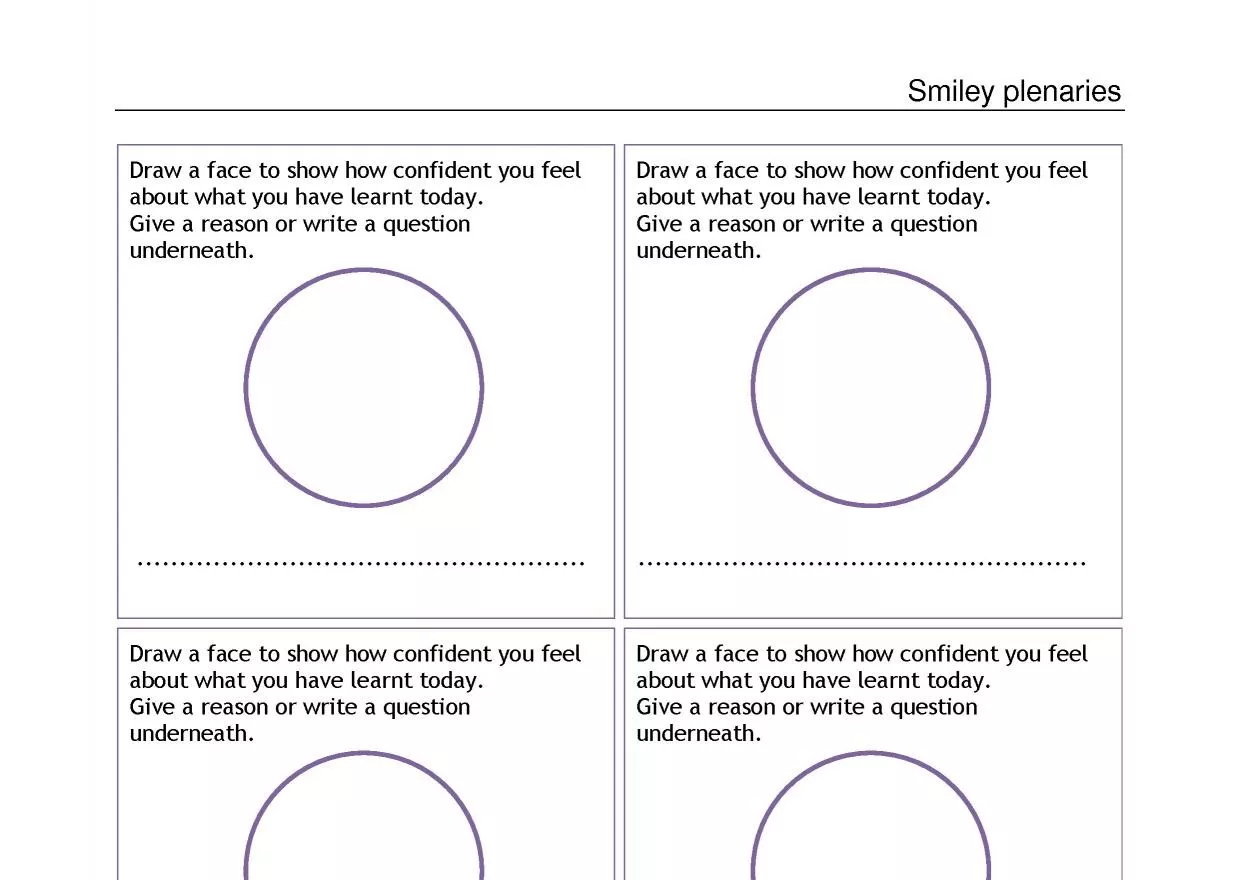
Using emojis, students reflect on the lesson in terms of their understanding/learning – happy, sad, bored, or confused – and provide an explanation to accompany their emoji choice. This low-stakes approach can encourage honest reflection, particularly from students who might be reluctant to admit they're struggling. Try our smiley plenaries resource for ready-made emoji exit cards.
9. Just a minute
Can students talk convincingly on the topic of today's lesson for a minute without hesitation, repetition or deviation? This high-energy plenary develops students' verbal fluency whilst demonstrating their confidence with the subject matter.
10. Reflection cards
Use these Reflection cards to get students to review their learning, with no planning. This requires minimal preparation from you whilst providing structured reflection prompts that work across different subjects and topics.


11. In the news
Students summarise their learning in the style of three newspaper headlines. This creative approach encourages students to identify the key points from the lesson whilst practising concise, impactful writing.
12. Hot seat
Ask a dramatically gifted or willing student to take on the role of someone or something they've been learning about, with the rest of the class asking questions that they answer in role. This immersive plenary works particularly well for history, literature, or science topics where students can embody historical figures, characters, or even concepts. Try our hot seating question cards for ready-made questions organised by category.
13. If this is the answer, what's the question?
Give students a selection of answers and ask them to write the questions based on the learning from today's lesson. This reverse approach requires higher-order thinking and helps students understand how knowledge can be tested in different ways.
14. Word tennis
In pairs, give students one of the key themes or words from the lesson to start, then they bounce connected words between each other to show their understanding. This fast-paced activity reveals the depth of students' understanding through the connections they make between concepts.
15. Traffic lights
Students draw a set of traffic lights where green means 'Go – and I can help other students', amber is 'I am almost there' and red is 'Stop – I need more help'. This simple self-assessment tool gives you valuable information to inform your planning whilst encouraging students to be honest about their understanding. Try our traffic light templates for ready-made printables including display posters and traffic light fans.
16. Class expert
Appoint three to five class experts at the beginning of the lesson to take responsibility for recapping the learning. This works particularly well when you are expecting a class visitor and helps build students' confidence in explaining concepts to others.
17. Lesson recipe
Students should write a recipe or menu (starter, main, dessert) to reflect their learning from today's lesson. This metaphorical approach encourages creative thinking about how the lesson components fit together to create a complete learning experience.
18. Paper fun
Create a fortune teller, origami creature or even a simple paper plane, asking students to write down a series of notes, keywords or questions on the different sides of the paper to reflect their learning. This kinaesthetic activity appeals to different learning styles and creates a tangible revision resource students can take away.
19. Bunting or washing lines
Give students five minutes to collaborate to create a set of flags or notes on a washing line to reflect what they've learnt. Try our bunting template for ready-made designs. This doubles up as a useful starter for the next lesson when you ask students to explain what is written on the flags.
20. What would you do differently next time?
Ask students to take a minute to reflect on their learning process and identify what they would do differently next time. This metacognitive approach helps students become more independent learners by encouraging them to evaluate their own strategies and approaches.


Download these 20 plenary ideas in a handy PDF format to keep for later or share with colleagues.

