
Peer assessment transforms students into active participants by having them evaluate each other's work. This article explores what peer assessment is, its benefits for developing critical thinking and communication skills, and what it looks like across age groups – from structured primary approaches to using detailed rubrics and mark schemes at the secondary levels. You'll find practical examples and resources for both primary and secondary classrooms, plus evidence-informed best practices to implement peer assessment successfully and create a supportive learning culture.
Contents
- What is peer assessment?
- What are the advantages of peer assessment?
- What does peer assessment look like?
- What are examples of peer assessment?
- Best practices for implementing peer assessment
What is peer assessment?
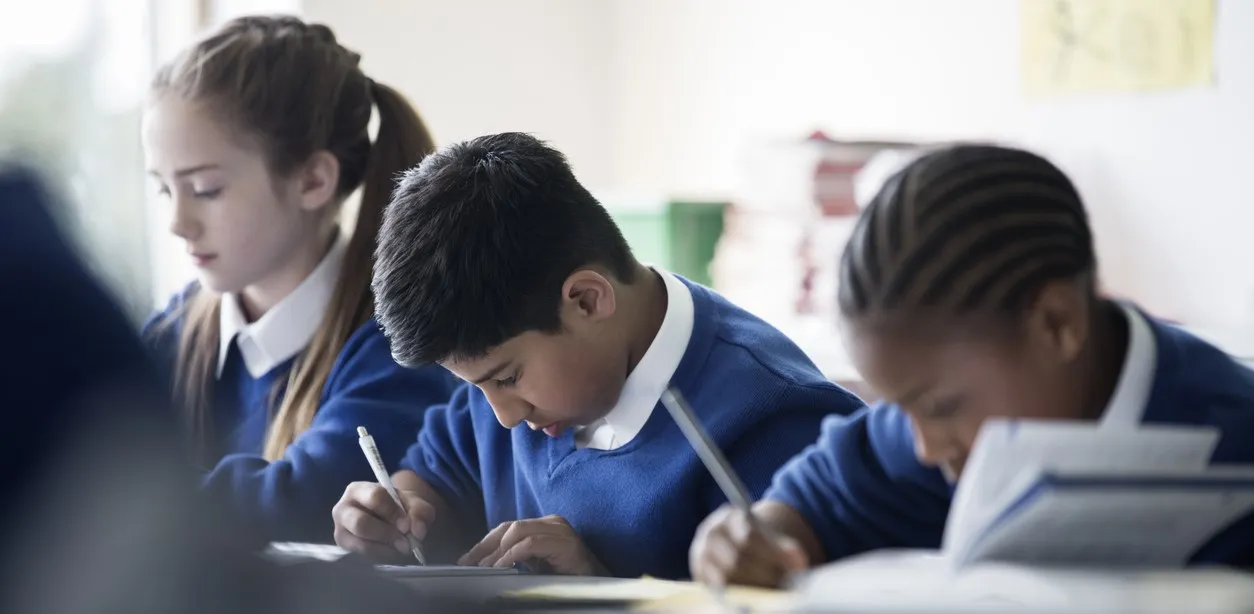
Peer assessment enables your students to evaluate and provide feedback on each other's work using established criteria or mark schemes. By implementing this approach in your classroom, you shift some responsibility for learning from yourself to your students, encouraging them to engage critically with assessment criteria whilst developing metacognitive skills.
As your students review their classmates' assignments, projects, presentations, or other learning outputs, they internalise success criteria, recognise strengths and areas for improvement in others' work and apply these insights to their own learning.
When peer assessment is done effectively, it transforms your students into active participants in the learning process, helping them develop a deeper understanding of what constitutes quality work while simultaneously improving their own performance and creating a community of learners who support each other's academic growth.
What are the advantages of peer assessment?
Implementing peer assessment offers numerous benefits for both students and teachers, making it a valuable addition to your assessment toolkit.
- Develops critical thinking and evaluation skills: Students think critically about quality standards and how well work meets criteria, strengthening their ability to evaluate information, identify strengths and weaknesses, and make reasoned judgements that transfer across subjects and into life beyond school.
- Deepens understanding of success criteria: Students engage thoroughly with learning objectives and success criteria, helping them internalise what excellent work looks like and understand expectations more clearly through seeing how criteria apply to real examples.
- Promotes active learning and engagement: Transforms students from passive recipients of feedback into active participants in the assessment process, increasing engagement and ownership of learning as they recognise their role in supporting peers' progress whilst improving their own understanding.
- Provides diverse perspectives: Feedback from multiple peers offers varied viewpoints, with different peers noticing different strengths or suggesting alternative approaches, enriching the feedback students receive beyond what a single teacher can provide.
- Develops communication and collaboration skills: Giving and receiving constructive feedback requires students to communicate effectively, express ideas clearly and respond to others' opinions, which are essential skills for academic success and future employment.
- Increases feedback opportunities: Peer assessment multiplies feedback opportunities, ensuring students receive timely responses that inform their next steps whilst teachers focus their expertise where it's most needed.
- Improves students' own work: Research consistently shows that assessing others' work helps students identify issues in their own work, making them better at self-assessment and self-correction after practising these skills with peers' work first.
- Reduces teacher workload strategically: Whilst peer assessment shouldn't replace teacher assessment, it can complement assessment practices by handling formative feedback on drafts or practice work, allowing teachers to concentrate their marking time on summative assessments and targeted interventions.
What does peer assessment look like?
The appearance and structure of peer assessment vary depending on the age group, subject, and specific learning context. Understanding what effective peer assessment looks like in practice helps you implement it successfully.
In primary classrooms
Peer assessment in primary settings typically involves more structured support and visual aids. You might see students using simple checklists with pictures or symbols, working in pairs to review each other's maths working out, or sitting together with writing partners to discuss one specific aspect of their stories, such as describing words or sentence openers.
The process is often guided by clear success criteria displayed prominently, with sentence stems to help younger students articulate feedback: "I really liked how you..." or "You could make this even better by...". Primary peer assessment works best when focused on one or two specific learning objectives rather than overall quality, making the task manageable for developing evaluators.
You might organise peer assessment as a whole-class activity with everyone reviewing work simultaneously, or build it into independent work time where students seek peer feedback before submitting work to you. Physical resources like feedback stamps, response tickets or assessment fans help younger children engage with the process.
In secondary classrooms
Secondary peer assessment tends to be more sophisticated and detailed, with students capable of handling complex rubrics and providing extended written feedback. For example, you might structure sessions where students exchange essays and spend 15-20 minutes providing detailed commentary on argument structure, evidence use, and expression.
The process often involves students annotating directly on peers' work (physical copies or digital documents), completing structured feedback forms, or engaging in assessment dialogues where they discuss work together. Secondary students can handle anonymous peer assessment, which sometimes encourages more honest feedback, though open assessment can build stronger classroom relationships.
You might integrate peer assessment into drafting processes, where students review peers' first drafts before final submission, or use it for formative purposes during practice exam conditions. Digital platforms can facilitate this, allowing students to access peers' work remotely and provide comments asynchronously.
Effective secondary peer assessment includes explicit modelling where you demonstrate quality feedback, opportunities for students to compare their assessments against yours or exemplar feedback, and reflection time where students consider how peer feedback will inform their revisions.
What are examples of peer assessment?
Peer assessment can take many forms across different subjects and year groups. The approach you choose will depend on your students' age, the subject matter and your specific learning objectives.
Examples for primary classrooms
- Two stars and a wish: Students identify two strengths (stars) and one improvement area (wish) in their peer's work. This simple structure works well for younger learners. See our two stars and a wish template.
- Gallery walks: Students display their work around the classroom and move around to view peers' work, leaving sticky note comments or completing simple feedback forms.
- Think-pair-share: Students discuss their work with a partner, offering verbal feedback based on teacher-provided sentence stems or prompts. Find out more about think-pair-share and similar strategies in our guide to using talk partners.
- Traffic light assessment: Peers use red, amber, or green indicators to show whether work meets specific success criteria, providing simple visual feedback. See our traffic lights assessment template.
- Peer editing pairs: Students work in pairs to review each other's writing, focusing on specific elements like punctuation, spelling or story structure. Try our proofreading guide and creative writing checklist to support this.
Examples for secondary classrooms
- Rubric-based assessment: Students use detailed rubrics or mark schemes to evaluate peers' essays, projects or presentations, providing structured feedback against specific criteria.
- Peer review workshops: Structured sessions where students exchange work and provide written feedback following a protocol or framework.
- Presentation feedback: After oral presentations, peers complete feedback forms addressing content, delivery, and visual aids.
- Online peer assessment: Using digital platforms, students can anonymously or openly review peers' work, leaving comments and suggestions.
- Group assessment: Team members evaluate each other's contributions to group projects, reflecting on collaboration and individual responsibilities.
- Practice exam marking: Students mark sample answers or each other's practice responses using mark schemes, developing understanding of assessment criteria.
Explore secondary peer assessment resources by subject:
- English peer assessment resources
- Science peer assessment resources
- MFL peer assessment resources (French, Spanish and German)
- Geography peer assessment resources
- History peer assessment resources
Best practices for implementing peer assessment
Successfully implementing peer assessment requires careful planning and scaffolding. These evidence-informed practices will help you maximise the benefits whilst avoiding common pitfalls.
1. Establish a supportive classroom culture
Peer assessment only works in classrooms where students feel safe giving and receiving feedback. Build a culture of respect and a growth mindset where feedback is viewed as helpful rather than critical. Model how to deliver constructive feedback kindly, emphasising that we're all learning together. Address any unkind or unconstructive feedback immediately to maintain this supportive environment.
2. Teach students how to give effective feedback
Don't assume students instinctively know how to provide useful feedback. Explicitly teach what makes feedback effective: specific rather than vague, actionable rather than just evaluative, and balanced between strengths and development areas. Provide models of excellent peer feedback and practise together using sample work before students assess each other's actual submissions.
3. Provide clear success criteria and assessment tools
Students need explicit criteria against which to assess peers' work. Develop clear rubrics, checklists, or mark schemes that break down expectations into manageable components. For younger students, simplify criteria and use visual supports. Ensure students understand these criteria thoroughly before beginning peer assessment.
4. Start small and build gradually
Introduce peer assessment with low-stakes tasks focused on specific, concrete elements before progressing to more complex assessments. Begin with assessing one aspect of work (such as whether an introduction includes a clear thesis statement) before asking students to evaluate overall quality. Build complexity as students develop confidence and competence.
5. Match assessment complexity to student capability
Consider your students' age, prior experience with peer assessment, and the complexity of the work being assessed. Primary students might focus on whether work meets two or three success criteria, whilst secondary students can handle sophisticated rubrics with multiple assessment dimensions. Scaffold appropriately for your context.
6. Model the process explicitly
Demonstrate peer assessment using sample work, thinking aloud as you identify strengths and suggest improvements. Show students how to reference success criteria, provide specific examples, and phrase feedback constructively. Consider creating exemplar peer feedback that students can refer to when completing their own assessments.
7. Build in accountability measures
Students take peer assessment more seriously when there's accountability. You might review a sample of peer feedback to ensure quality, ask students to explain how they'll use peer feedback to improve their work, or have students assess whether peer feedback was helpful. Make it clear that providing thoughtful feedback is part of their learning responsibilities.
8. Ensure students act on feedback received
Peer assessment loses value if students receive feedback but never use it. Build in time for students to read peer comments, reflect on suggestions, and revise their work accordingly. You might ask students to complete a reflection sheet explaining which peer feedback they'll implement and why, or to track changes made in response to peer suggestions.
9. Quality-assure the process
Particularly when introducing peer assessment, monitor the feedback students provide. Check that feedback is constructive, accurate, and specific. Address any issues through whole-class teaching or individual conversations. Over time, as students become more skilled, they'll require less oversight, but initial monitoring ensures the process benefits everyone.
10. Combine with self-assessment and teacher feedback
Peer assessment works best as part of a comprehensive assessment strategy, not as a replacement for other forms. Students benefit from comparing peer feedback with their own self-assessment and your feedback, helping them calibrate their understanding of quality standards. This triangulation of perspectives provides the richest learning experience.
11. Differentiate the approach
Not all students are ready for the same level of peer assessment. Provide additional scaffolding for students who need it – perhaps sentence stems, simplified rubrics, or worked examples. For more confident students, you might reduce scaffolding or ask them to assess more complex aspects of work. Flexible grouping can pair students thoughtfully based on their readiness to give and receive feedback.
12. Reflect on and refine your practice
After peer assessment activities, reflect on what worked well and what could be improved. Gather student feedback about the process – did they find peer comments helpful? What would make peer assessment more valuable? Use these insights to continuously improve your implementation, adapting structures and supports based on your students' needs and responses.

