
As primary teachers, we know how important it is for children to master talking about things that have already happened. If you're looking for fresh ideas and practical approaches to teaching past tense, you've come to the right place. Here we break down the four main types of past tense, share some classroom-tested activities, and offer plenty of resources to make your grammar lessons more engaging.
Contents
- What is the past tense?
- How to teach the past tense
- 5 ways to teach the past tense
- KS1 and KS2 past tense resources
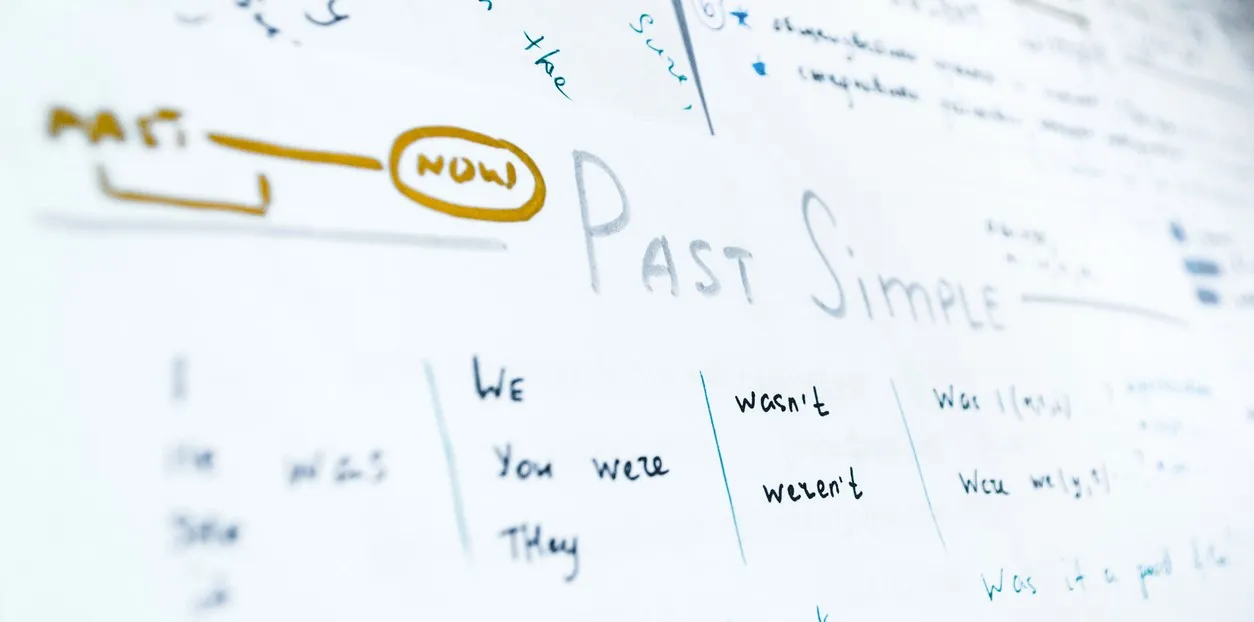
What is the past tense?
The past tense shows that something began, took place and finished in the past. This could be the far or near past, and different types of the past tense can tell us more about the timeframe of the action.
The past tense has four main categories that help us talk about past actions, feelings, states of being or events.
Simple past tense
The simple past tense describes actions or events that were completed in the past. Regular verbs in the simple past tense are formed by adding ‘ed’ to the end of the infinitive verb form.
Examples of the simple past tense are:
- I watched a film
- You baked a cake
- He walked down the street
- We listened to the song
- They loved the play
This present to past tense resource supports children in understanding the change from present to past tense with simple and structured activities.
Past continuous tense
Also known as the past progressive, the past continuous tense describes an event that took place at some specific time in the past.
It might be used to show that an ongoing action was interrupted by another action, or that two past actions occurred at the same time.
The past continuous, or past progressive, tense is formed using the past tense of the verb ‘to be’ (was/were) added to the present participle (‘ing’) form of the verb.
Some past continuous tense examples are:
- I was reading my book when Mum called my name.
- Jane was wrapping the birthday present she bought this morning.
- He was sleeping when the phone rang.
- You were baking a cake, and I wanted a taste.
Practising the past progressive resource is great for supporting KS2 children to build confidence with this tense.
Past perfect tense
The past perfect tense is used to tell us that an action or event happened in the past before another action or event.
The past perfect is formed using the auxiliary verb ‘had’ and the past participle of the main verb, such as:
- I had never eaten raw fish before we went to the local sushi restaurant.
- The film had already started by the time we got to the cinema.
- Lucy had cooked dinner before the surprise pizza arrived.
Check out this past perfect resource which supports your children to use this tense accurately in their work.
Past perfect continuous tense
The past perfect continuous tense, also known as the past perfect progressive, explains that an action or event started and continued until another action or event occurred sometime in the past.
The past perfect continuous is formed by adding the auxiliary verbs ‘had’ and ‘been’ to the present participle of the main verb.
Some past perfect continuous tense examples are:
- I had been dancing for hours and felt very tired.
- Joe had been searching for his money for ages before he found it under the sofa.
- Jane had been running all day so her feet were sore.
How to teach the past tense
Teaching tenses at primary school is a really important part of children learning about communication and how to convey their ideas about time, events and actions.
Tenses are typically introduced to children in KS1. This teaching is built on through KS2 as children are usually asked to change sentences using different tenses and identify the tense in a sentence in their KS2 SATs assessments.
Teaching the past tense requires clear explanations, real-life examples and lots of active practice to ensure children understand the rules and can apply these in their speech and writing.
What are the rules for teaching the past tense?
In KS1, children should understand the difference between the present and past tense and begin to use simple past tense forms.
Teaching can focus on forming the simple past tense for regular verbs, with the ‘ed’ suffix. Some irregular verbs in the past tense can be introduced.
At KS2, children should be deepening their understanding of past tense forms, covering all four categories of the past tense.
5 ways to teach the past tense
Include fun games and interactive tasks to help children better connect with past tense forms. Some engaging activities include:
- Past tense hopping game. Children who know the past tense form of a verb in the present tense can sit down while the rest continue to hop on the spot.
- Past tense snap game. Make cards where each pair has the same sentence on both cards, one in the present tense and the other in the past tense. Children can play snap to get the pair right.
- Tense matching game. Children turn over the cards and get to keep the pair with the present tense and past tense of the same verb.
- Hands up for the past tense. Read a chapter of a book or any text you choose and get children to put their hand up when they spot the past tense. Bonus points if they can identify the specific past tense being used.
- Tense pictionary. Children get a sentence and have to draw it. The child that can describe the picture using the past tense wins.
KS1 and KS2 past tense resources
Here are some helpful past tense resources for KS1 and KS2:
KS1
- Tense turmoil! - past or present? - perfect for helping children get to grips with the past tense.
- Dinosaur sentences - a fun resource for KS1 children as they identify the past tense and learn about the ‘ed’ suffix.
- Snappy Verbs! a great way to get KS1 children thinking about present and past tense examples.
- Changing tenses - this resource uses simple examples to support children as they identify the different tenses of familiar verbs.
- Verb tenses - ideal for year 2 as children start to differentiate between the past, present and future tenses.
- Using verbs in year 2 - this PowerPoint lesson explores tense forms including past tense examples.
- Which tense? - a recount activity for years 2 and 3 to help children identify verbs and put them into the past tense.
KS2
- Past simple or past progressive - helps children identify the differences between these two past tense forms. Includes answers.
- Using the present perfect and simple past forms - a helpful resource for past tense knowledge consolidation.
- The past isn’t so perfect - the past perfect tense - this resource is great for year 5 as they learn how to use the past perfect tense in their work.
- Past simple or present perfect? It’s all so tense - A KS2 worksheet that supports students to understand the difference between these two tenses with a range of activities.

